Background
First detected in Africa in 2016, Western Asia in 2019, and mainland Europe in 2023, the polyphagous fall armyworm (FAW) poses a significant threat to European agriculture. Since 2019, it has been classified as a priority pest in the EU, due to its high potential for establishment and spread, particularly in the context of global warming and increased trade both within and beyond EU borders.
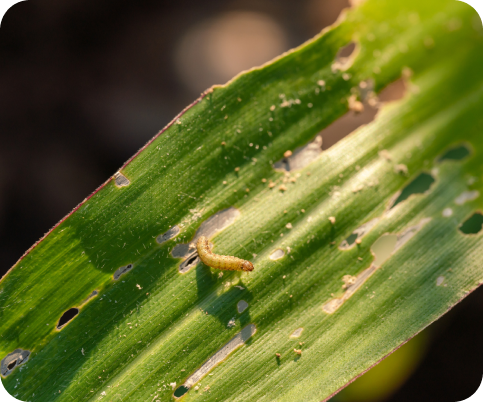
The fall armyworm (Spodoptera frugiperda) feeds on 80-350+ plant species, most prominently destroying crops such as maize, threatening food security and causing economic damage. Current pest management practices involve the use of insecticides in maize cultivation. However, as the pest problem has intensified, pesticide use has surged to unprecedented levels, raising serious concerns about human health and environmental impacts.
Mission
EUFAWREADY seeks to enhance the readiness of European agricultural stakeholders, such as farmers, advisors, technicians, industry professionals, and plant health authorities, for potential FAW outbreaks. It will provide tools for early detection and effective management of FAW within the EU, aiming to minimise its economic, environmental, and social impacts, while limiting the expected increase in synthetic pesticide use across European agroecosystems.
Objectives

Improve stakeholder awareness and preparedness on FAW risks and enhance their engagement in FAW management efforts

Generate new knowledge on the biology of European FAW populations to determine the traits enhancing their evasion potential

Evaluate the economic and environmental impacts that the arrival of FAW may induce in the EU

Provide European stakeholders with efficient strategies for the early detection and monitoring of FAW

Leverage natural enemies to broaden the range of sustainable control options available to European farmers

Explore microbial agents to enhance eco-friendly crop protection for European farmers

Diversify FAW control strategies in Europe by exploring cutting-edge plant-based and natural semiochemical solutions

Provide accessibility to the project's scientific and technical results to stakeholders, ensuring their full awareness of FAW risks and management options